Most drivers assume a windshield is a windshield. Break one, order another, bolt it in, done. That logic held up fine twenty years ago. On a modern luxury vehicle, it falls apart quickly, and the gap between “glass installed” and “glass installed correctly” has never mattered more than it does now.
At Star Windshield, we work on these vehicles every week, from BMW and Mercedes-Benz to Audi, Porsche and Lexus, and the questions we hear most often come down to one thing: owners want to know what they’re actually paying for. Here’s the honest version.
The windshield became part of the safety system
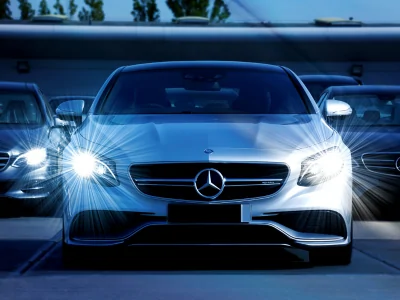
Somewhere along the way, the glass stopped being a passive barrier against wind and bugs. On many luxury models, the windshield now holds a forward-facing camera, sometimes paired with sensors that read lane markings, traffic, pedestrians, and the distance to the car ahead. That camera feeds the systems people rely on without thinking: automatic emergency braking, lane keeping assist, adaptive cruise control.
When the glass comes out, that camera loses its reference point. The replacement glass has to sit in almost the exact same position, at the exact same angle, with the same optical clarity in the camera’s viewing zone. A few millimetres of variance, or a slightly different curvature in cheaper glass, changes what the camera sees. That’s the part most people never hear about until something feels off after a replacement.
Why Proper Windshield Installation Matters on Luxury Vehicles
You can buy a perfect piece of glass and still end up with a bad result. Installation quality decides whether the windshield bonds properly, seals against water, and sits at the correct height for the camera behind it.
A few things separate a proper job from a rushed one:
- The right urethane adhesive, applied at the correct thickness, with a real cure time before the car goes back on the road
- Clean, rust-free bonding surfaces so the glass holds during a collision or rollover
- Correct positioning, since the windshield contributes to structural strength and airbag timing on many vehicles
Skip the cure time or reuse a contaminated surface, and the glass might look fine while failing at the one moment it’s supposed to protect you.
Calibration is not optional, and here’s what happens without it
After the glass is set, the camera almost always needs recalibration so the vehicle knows exactly where that camera is now aiming. This is where corners get cut most often, because calibration takes equipment, time, and knowledge that not every shop invests in.
When it’s skipped or done poorly, the systems don’t announce their own failure. They keep running. Even when no warning lights appear on the dash, the systems may still not perform exactly the way the manufacturer intended. Lane keeping might nudge the wheel a fraction too late. Automatic braking might read a distance slightly wrong. The car feels normal in everyday driving, which is exactly what makes it a problem. On the QEW or a winter commute through Niagara, those systems earn their keep in the split second you’re not paying full attention. Calibration is what keeps them honest.
OEM vs Aftermarket Windshield Glass: Which Is Right for a Luxury Vehicle?
OEM glass is not automatically the only right choice, and any shop that tells you otherwise is oversimplifying. Good quality aftermarket glass works well on plenty of vehicles. A reputable shop should explain which option suits your specific vehicle instead of recommending the same solution to everyone who walks in.
OEM tends to matter most when:
- Your vehicle uses a complex camera or sensor array that’s sensitive to glass optics
- The windshield has built-in features like heating elements, acoustic layers, or heads-up display projection that aftermarket versions don’t replicate cleanly
- The manufacturer’s calibration process expects OEM optical specifications to pass
For a straightforward windshield with no embedded technology, a quality aftermarket panel can be a sensible, cost-effective decision. The right answer depends on your specific car, not a blanket rule.
Why the Cheapest Windshield Quote Isn’t Always the Best Value
A lower number on the quote can be genuinely fine, but it’s worth knowing what it might leave out. Some quotes don’t include calibration, which becomes a separate cost later. Glass quality varies between suppliers, and so does the adhesive and whether the shop allows proper cure time before you drive. Experience matters too, since positioning the glass correctly for the camera behind it isn’t something every installer does the same way. The goal isn’t to pay more. It’s to compare quotes fairly and understand what each one actually covers before you decide.
Replacement isn’t always necessary
Luxury car owners are often told to replace when a repair would have held. A chip or crack can frequently be repaired if it’s smaller than a couple of centimetres, not directly in the camera’s line of sight, and not spreading toward the edges.
Ontario roads produce a lot of stone chips, especially from highway gravel and winter road treatment. Daily travel on the QEW, Highway 403, and across the Niagara Region tends to throw up plenty of gravel, which is why chips are so common around here. Catching one early often means a repair instead of a full replacement, which saves you the glass cost and the calibration entirely. Waiting until a small chip runs into a long crack usually removes that option.
Ask these before you approve the work
A few direct questions tell you a lot about who’s touching your car:
- Will you recalibrate the camera and safety systems, and is that included in the quote?
- Are you using OEM or aftermarket glass, and why is that the right call for my model?
- What adhesive are you using, and how long before I can safely drive?
- Is there a warranty on both the glass and the workmanship?
A shop that answers these clearly is one that understands what it’s actually working on.
Before a small chip becomes a bigger problem
A windshield on a luxury vehicle is tied directly to how the car protects you, so it deserves to be handled by people who treat it that way. With 20+ years of experience and same day service across Burlington, St. Catharines, Niagara Falls, Grimsby, Stoney Creek, and the surrounding region, we’re happy to inspect the damage honestly, explain whether a repair or replacement makes the most sense, and answer any questions before any work begins. Our work is backed by a 90 days product warranty.
If you’ve got a chip or crack worth checking, call us at 647-509-2154 before it spreads. Catching it early usually gives you the most options and the lowest cost.