You spot a fresh crack spreading across your windshield, and before booking a repair, you go looking for a cheaper option. Somewhere on a forum, someone swears clear nail polish stopped their chip from growing. Someone else says a drop of super glue did the trick. So the obvious question: do these hacks actually work?
The short answer is no, not as a real repair. At best, nail polish or super glue may cover or partially fill visible damage, but that is not the same as repairing the windshield. The glass underneath stays damaged, and in some cases leftover residue can make a later professional repair more difficult.
Can Nail Polish or Super Glue Actually Repair a Windshield?
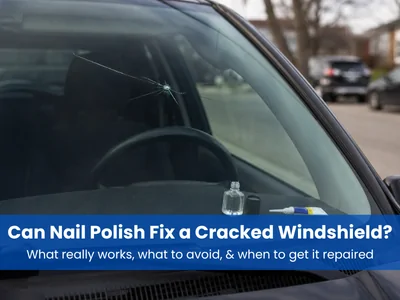
There’s a difference between covering damage and repairing it. A proper windshield repair uses a specialized resin intended for automotive glass, which fills the chip or crack, is cured, and bonds to the glass to restore as much of its integrity and appearance as reasonably possible. Household products aren’t designed for this. They may sit on top of the damage or fill part of the gap, but the glass itself stays compromised. Nail polish and super glue simply aren’t made for the job.
Why Nail Polish Is Not a Proper Windshield Repair?
The idea makes sense on the surface. Clear polish is thin, it dries hard, and brushed into a narrow crack it can make the line less obvious. That’s where the appeal ends.
Nail polish is a cosmetic coating, not an automotive glass product. It doesn’t penetrate and bond the way repair resin does, so it doesn’t reinforce the damaged area or stop it from spreading under stress. It mostly changes how the crack looks, not what’s happening inside the glass.
There’s also a practical downside. If polish settles into a chip and later needs professional attention, that dried residue can sit in the very space a technician needs to clean for resin to flow into. It won’t ruin every repair, but it can make the job harder or affect the result.
Can Super Glue Repair a Cracked Windshield?
Super glue holds a broken mug together, so surely it can hold glass? That’s the reasoning, and it’s understandable. The problem is that being a strong general adhesive doesn’t make something right for a windshield.
Super glue (cyanoacrylate) isn’t formulated for automotive glass or for the conditions a windshield lives through. Your car bakes in summer sun, chills overnight, vibrates over Ontario’s pothole-ridden roads, and flexes constantly. Super glue can become brittle, cloud up, or leave a visible residue right in your line of sight. It cures fast and unevenly, often before it’s had any chance to settle into fine cracks. Holding two surfaces together is not the same as restoring laminated safety glass, and treating it as a temporary structural fix gives you a false sense of security.
Why Windshield Cracks Can Spread?
A small chip rarely stays small forever. Everyday driving keeps working on it:
- Temperature swings, like blasting the defroster on a cold St. Catharines morning, expand and contract the glass
- Vibration from regular driving and highway speeds
- Potholes and rough pavement sending sharp jolts through the frame
- Moisture and grit working into the damaged area
Any of these can turn a repairable chip into a crack that runs.
Can Every Windshield Crack Be Repaired?
Not always, and it depends on more than whether the damage “looks small.” Whether repair is realistic comes down to factors like:
- The size and type of damage
- Where it sits on the glass
- Whether it reaches the edge of the windshield
- Whether it’s in your critical line of sight
- How much surrounding damage there is
A chip near the edge or directly in the driver’s view, for example, can be trickier than a similar-sized one elsewhere. The honest answer is that a proper assessment is what determines whether repair or full windshield replacement makes sense for your specific situation.
What to Do After Finding a Windshield Crack?
A few sensible steps while you sort out next moves:
- Don’t fill the damage with nail polish, super glue, or any household product.
- Avoid pressing on or picking at the damaged spot.
- Keep the area clean and dry where you reasonably can, so grit and moisture stay out.
- Book a professional assessment rather than hoping it holds.
- Move quickly if the crack is growing or creeping into your view.
Are DIY Windshield Repair Kits Different?
Yes, and that’s a fair distinction. Purpose-made repair kits use resin intended for automotive glass, which sets them apart from cosmetic products like nail polish or super glue. That doesn’t mean every chip or crack is a good candidate for DIY, though. The type of damage, where it sits, and how well the repair is carried out all affect the outcome, and the correct product alone doesn’t guarantee a good result. If the damage is spreading, poorly located, reaching an edge, or you’re simply unsure, a professional assessment is the sensible call.
Need Windshield Repair in Burlington?
If you’ve got a chip or crack and you’re not sure whether it needs repair or replacement, we can tell you quickly. With over 20 years of experience across the Niagara Region, we assess damage on any make and model and offer same day service to drivers in Burlington, Stoney Creek, Niagara Falls, and the surrounding areas.
Getting windshield damage looked at early can help determine whether a repair is still an option before the crack has a chance to grow further. Call us at 647-509-2154 and we’ll help you figure out the right fix.