Winter in Burlington doesn’t just mean snow-covered streets and frozen driveways — it also means extra stress on your vehicle, especially the windshield. Ice may look harmless, but it’s one of the most damaging winter hazards for car owners. It can turn a tiny chip into a long crack, cause scratches while scraping, and even lead to full windshield replacement if not handled properly.
This updated guide explains why ice is a serious threat, how winter conditions in Burlington make it worse, and what modern methods can help you protect your windshield all season long.
Why Is Ice Dangerous for Windshields?
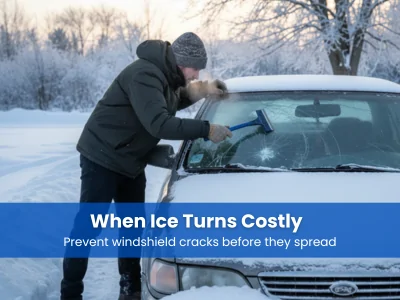
Your car’s windshield may look solid, but it’s vulnerable to sudden temperature changes and moisture. When water seeps into even the smallest chip and freezes, it expands — pushing against the glass from within. Over repeated freeze–thaw cycles, those tiny chips turn into cracks. Rapid shifts in temperature, like running a hot defroster on an icy windshield, can make it worse.
Burlington’s winters often bring quick weather swings — a mild afternoon followed by an overnight freeze. This constant cycle of melting and refreezing makes local drivers more likely to see small cracks spread fast.
Common Ways Ice Damages Your Windshield
- Crack Expansion and Chipping: Existing chips easily expand when trapped moisture freezes. Even the smallest damage can grow across the glass in a matter of days.
- Scratching from Improper Tools: Using metal scrapers, keys, or other sharp objects can permanently scratch the surface, affecting visibility and the integrity of the glass.
- Freezing Rain and Heavy Ice Layers: During Burlington’s icy storms, thick glaze can bond tightly to the glass. Forcing it off often leads to scratches or stress cracks.
- Thermal Shock: Pouring hot water or blasting high heat on a frozen windshield creates rapid expansion and contraction, sometimes resulting in sudden cracking.
Even a small act — like scraping too hard — can turn into an expensive repair, so prevention is always the best approach.
What’s New in 2025 – Modern Ways to Prevent Ice Damage
Car technology and winter products have come a long way. Here are updated tips and options for 2025 that make windshield protection easier and safer:
1. Heated Windshields and Metal-Coated Glass
Many newer vehicles — especially hybrids and EVs — come with built-in heating elements that melt frost quickly. If your car has this feature, activate it before scraping. It’s one of the safest and fastest ways to clear ice without stressing the glass.
2. Remote Start and Pre-Conditioning Systems
A growing number of Burlington drivers use remote start or manufacturer apps to preheat their vehicles before leaving home. Letting your car warm up for a few minutes gently melts surface frost and eliminates the need for aggressive scraping.
3. Hydrophobic Coatings and De-Icing Sprays
Water-repellent coatings create a smooth surface that prevents ice from bonding tightly to the glass. Apply a hydrophobic product before the cold sets in, and touch it up every few weeks. Pair it with a trusted de-icing spray for heavy frosts — both save time and effort during busy winter mornings.
Simple, Safe Tips Burlington Drivers Should Follow This Winter
Along with tech-based solutions, some tried-and-tested habits still work best for everyday drivers. These are practical, no-fuss steps you can take to keep your windshield safe from Burlington’s harsh winter elements:
- Repair Chips Early: Schedule minor windshield chip repairs before temperatures drop. Once water freezes inside a chip, the damage spreads quickly. A quick repair now can prevent a costly replacement later.
- Use a Windshield Cover at Night: If your car is parked outdoors, a windshield cover or even a heavy towel can stop frost from forming overnight — especially useful for apartment parking lots or curbside spaces downtown.
- Defrost Gradually: Start the engine, switch on the defroster at low or medium heat, and let the glass warm up slowly. Gradual heating prevents sudden stress on the glass layers.
- Avoid Hot Water: Never pour hot or boiling water on an icy windshield. The sudden temperature change can make an existing crack worse or even shatter the glass.
- Use Proper Tools Only: Invest in a good-quality plastic scraper or rubber squeegee. Avoid metal edges or hard brushes that can scratch the surface.
- Try a De-Icing Spray: Commercial de-icers melt frost safely and are easy to find at Burlington auto shops. Spray, wait a few seconds, then gently scrape — no need for force.
- Beware of DIY Hacks: Ignore viral “quick fixes” using salt, vinegar, or dish soap. These mixtures can damage paint, wiper blades, or the windshield itself. Stick with tested, automotive-safe methods.
- Apply a Hydrophobic Treatment: Products like Rain-X or similar glass repellents help water bead off the windshield, reducing the buildup of ice and slush. Apply it on a clean, dry surface and reapply every few weeks during winter.
Before You Drive – Quick Safety Checklist
- Clear snow and ice from all glass surfaces, mirrors, and the car roof.
- Warm your vehicle gradually before switching to full heat.
- Keep a small scraper and de-icing spray in your glove box.
- Check that your wipers are flexible and not frozen to the windshield.
When to Seek Professional Help?
Even a small chip can worsen fast in Burlington’s freezing temperatures. If you notice spreading cracks, cloudy edges, or hear a faint snap after defrosting, it’s time to get it checked. Cold weather and road salt can quickly turn a minor repair into a full replacement.
At Star Windshield, we offer quick, expert windshield repair for Burlington drivers using winter-resistant materials. Most inspections take just minutes — saving you time and preventing costlier damage later. Call 647-509-2154 before the next freeze to stay safe this winter.